(Illicit) Sex and the City: Transgressive Female Sexuality and the "Porno Gothic" Genre in George Thompson's <i>City Crimes</i>
Keywords:
American, feminism, female sexuality, free-love, George Thompson, City Crimes, porno-gothic, city mysteries, sensation fiction, flash press, New York City, BostonAbstract
Focused on George Thompson’s “porno-gothic” City Crimes (1849), this article rebuts the claim, put forth by Reynolds and Gladman in their introduction to a volume of his work, that Thompson “may have created for woman readers a tantalizing space of sexual imagination.” The editors suggest that Thompson’s depiction of sexually voracious women can be read as provocatively feminist, specifically in its evocation of the free-love movement. This article seeks to undermine that claim by examining how the novel constructs female sexuality as transgressive and deviant, thereby eroding any feminist potential. By showcasing sexually insatiable female characters who seek lovers and kill their husbands in order to preserve their sexual freedom, and who ultimately suffer violent and ignominious deaths, City Crimes fuses female sexual appetite and fulfillment with criminality. As a result, Thompson’s portrayal of women is not only unsympathetic but misogynist, and reflects the nineteenth-century gendered double standard.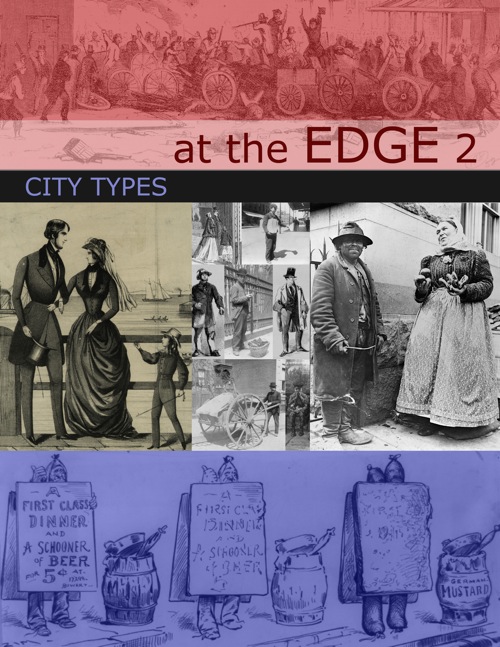
Downloads
Published
2012-10-02
Issue
Section
Articles
License
Authors who publish with this journal agree to the following terms:- Authors retain copyright and grant the journal right of first publication with the work simultaneously licensed under a Creative Commons Attribution License that allows others to share the work with an acknowledgement of the work's authorship and initial publication in this journal.
- Authors are able to enter into separate, additional contractual arrangements for the non-exclusive distribution of the journal's published version of the work (e.g., post it to an institutional repository or publish it in a book), with an acknowledgement of its initial publication in this journal.
- Authors are permitted and encouraged to post their work online (e.g., in institutional repositories or on their website) prior to and during the submission process, as it can lead to productive exchanges, as well as earlier and greater citation of published work (See The Effect of Open Access).