All Children Must Be in Class: Popular Representations of Class and Childhood in Nineteenth-Century America
Keywords:
Richard Outcault, Yellow Kid, Hogan’s Alley, childhood, George Thompson, City Crimes, city, class, city-mysteriesAbstract
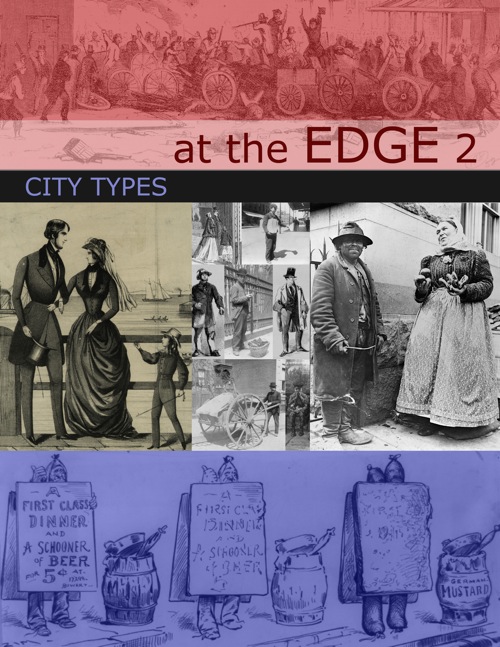
Focusing on George Thompson’s City Crimes and on Richard Outcault’s Yellow Kid newspaper comics, this article argues that nineteenth-century urban childhood is a constructed, classed identity. Though it has attracted less critical attention than gender, race, and class, age is also a social construct. Shared cultural assumptions mediate the way society imagines childhood and the way children are expected to behave. These assumptions play out in fiction, specifically in the ways children are depicted in fiction. Thompson and Outcault’s different depictions of childhood reflect the differing way the two writers associate childhood with class. Thompson depicts children as innocent, and as threatened by the corrupting influence of the city, because Thompson’s children are symbols of bourgeois purity. Outcault, by contrast, depicts children as a wild and corrupting influence upon the city, because Outcault’s children are symbols of poverty and its threat to bourgeois safety.
Downloads
Published
Issue
Section
License
Authors who publish with this journal agree to the following terms:- Authors retain copyright and grant the journal right of first publication with the work simultaneously licensed under a Creative Commons Attribution License that allows others to share the work with an acknowledgement of the work's authorship and initial publication in this journal.
- Authors are able to enter into separate, additional contractual arrangements for the non-exclusive distribution of the journal's published version of the work (e.g., post it to an institutional repository or publish it in a book), with an acknowledgement of its initial publication in this journal.
- Authors are permitted and encouraged to post their work online (e.g., in institutional repositories or on their website) prior to and during the submission process, as it can lead to productive exchanges, as well as earlier and greater citation of published work (See The Effect of Open Access).