Whoring the <i>Flâneur</i>: Re-visioning the American Woman of the Town
Keywords:
flâneur, prostitution, sexuality, gender, disease, commodification, 19th-century American city, “My Kinsman, Major Molineux”, Arthur Mervyn, City Crimes, Hawthorne, Brockden Brown, George Thompson, Lydia Maria Child, Baudelaire, PoeAbstract
Analyzing a range of nineteenth-century texts, this article argues that the spatially fixed and commodified literary prostitute is a curious—and ultimately inaccurate—analogue to the flâneur. Immortalized by Charles Baudelaire, the flâneur is European, male, and financially secure. A part of and apart from the crowd, he is anonymous and autonomous, independent even within his crowded metropolis. While twentieth-century discussions of female flânerie frequently posit the prostitute as an example of a female flâneur, this article complicates the assumption that female flânerie could exist in nineteenth-century America. Restrictions on the literary prostitute’s mobility undermine her potential for flânerie, and in “My Kinsman, Major Molineux,” Arthur Mervyn, and City Crimes, Nathaniel Hawthorne, Charles Brockden Brown, and George Thompson present prostitutes fettered by their gender and profession. Associated with lax morals, physical contamination, and superfluous consumption, these women remain sequestered in the home, unable to traverse their cities independently or freely.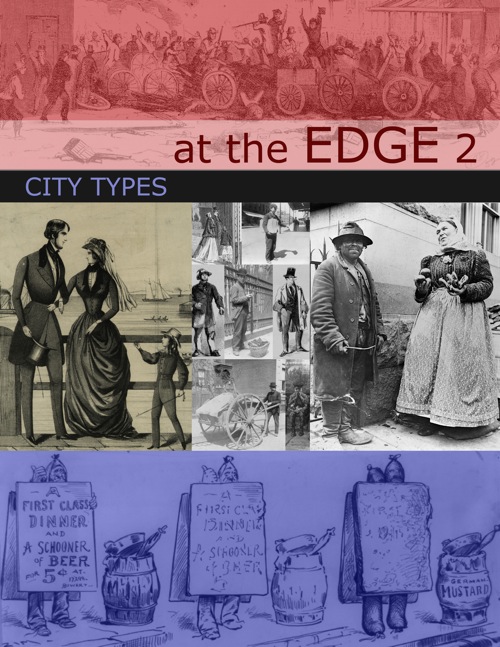
Downloads
Published
2012-10-02
Issue
Section
Articles
License
Authors who publish with this journal agree to the following terms:- Authors retain copyright and grant the journal right of first publication with the work simultaneously licensed under a Creative Commons Attribution License that allows others to share the work with an acknowledgement of the work's authorship and initial publication in this journal.
- Authors are able to enter into separate, additional contractual arrangements for the non-exclusive distribution of the journal's published version of the work (e.g., post it to an institutional repository or publish it in a book), with an acknowledgement of its initial publication in this journal.
- Authors are permitted and encouraged to post their work online (e.g., in institutional repositories or on their website) prior to and during the submission process, as it can lead to productive exchanges, as well as earlier and greater citation of published work (See The Effect of Open Access).